
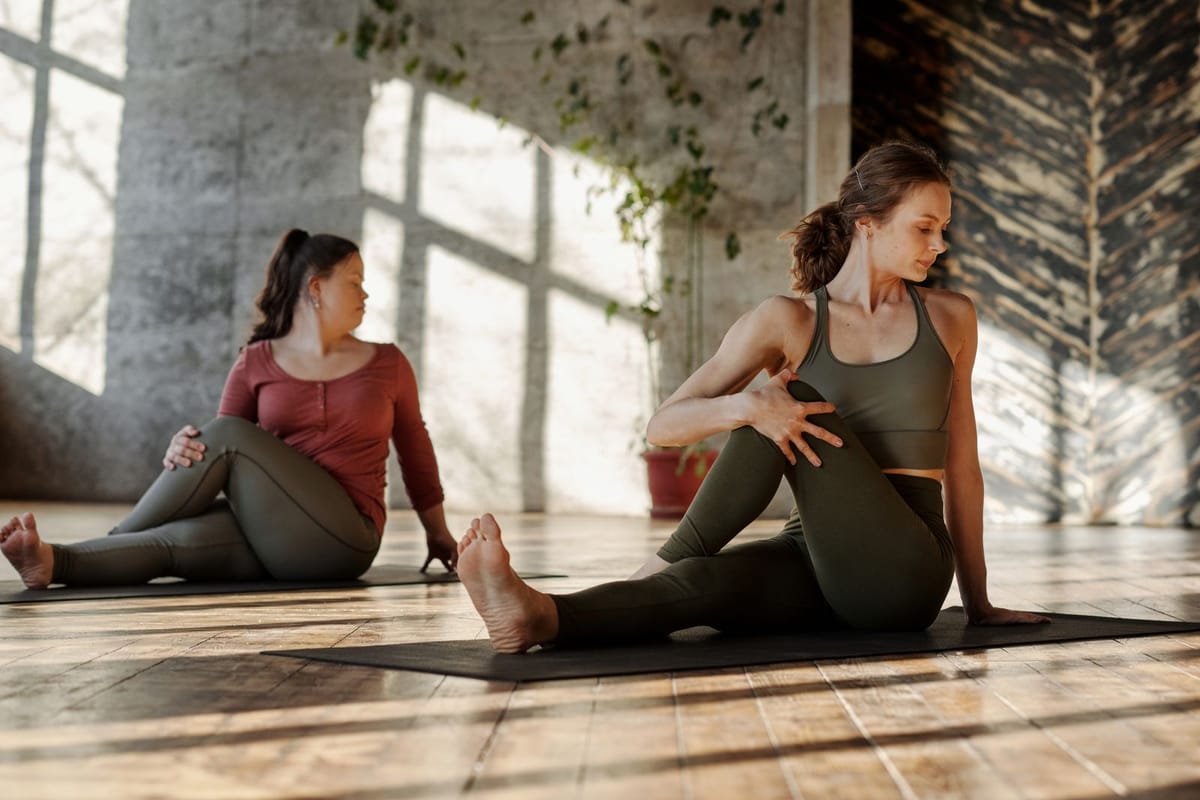
Mobility vs. Flexibility: The Key Difference
The simplest way to separate the two is to ask who is doing the work. With flexibility, an outside force creates the range: gravity, a strap, a partner, or your hands. With mobility, your own muscles create and control the range.
- Flexibility is the ability of a muscle and its connective tissue to lengthen. It depends on muscle length, tissue extensibility, joint structure, and how well your nervous system tolerates the stretch. Much of the short-term gain from stretching comes from improved stretch tolerance.
- Mobility is the ability to actively move a joint through its available range under control. A deep, upright squat or an overhead press with the arms fully extended both require mobility, not just flexibility.
| Flexibility | Mobility | |
|---|---|---|
| Definition | Passive length of muscles and tissues | Active, controlled range at a joint |
| Requires strength? | No | Yes |
| Typical training | Static stretching | Active drills and full-range strength work |
| Example | Pulling your heel toward your glute | Raising your knee high using only hip muscles |
A Simple Test to Feel the Difference
Lie on your back and pull one straight leg toward you with a strap: that is passive flexibility. Now lift the same leg as high as you can using only your hip muscles: that is active mobility. The gap between the two is range you have but cannot yet control, and mobility training aims to shrink it. Retest it every few weeks; as active range improves, the gap narrows, which is a simple way to measure progress at home.
Who Needs More Mobility and Who Needs More Flexibility?
Most lifters, desk workers, and adults returning to exercise benefit most from mobility work, because they usually lack control at the end of their range rather than tissue length. Naturally flexible people, including many dancers and yoga practitioners, often need strength in their existing range. People with short, stiff hip flexors, calves, or chest muscles benefit from adding stretching alongside mobility drills.
How to Train Mobility and Flexibility
- Mobility drills: controlled articular rotations (CARs) for the hips and shoulders, 90/90 hip switches, half-kneeling ankle rocks, thoracic open books, and goblet squat holds.
- Full-range strength training: Romanian deadlifts, split squats, and deep goblet squats build strength at end range. A strength and conditioning program trains this throughout the year.
- Flexibility work: couch stretch for the hip flexors, strap hamstring stretch, and doorway pec stretch. Hold each stretch for 10 to 30 seconds and repeat until you reach about 60 seconds per muscle, at least two to three days per week, stretching to mild tension rather than pain.
- Timing: do dynamic mobility drills before training. Save longer static stretches for after training, because static holds of roughly 60 seconds or more per muscle right before heavy lifting can slightly reduce strength and power for a short time.
A 10-Minute Mobility Routine
- Hip CARs, 3 slow circles per side.
- 90/90 hip switches, 8 per side.
- Half-kneeling ankle rocks, 10 per side.
- Thoracic open books, 8 per side.
- Goblet squat hold, 30 to 45 seconds.
Use it as a warm-up before strength training or as a short daily routine on rest days. Desk workers can also break it into two-minute pieces during the workday, such as ankle rocks and open books between meetings.
Why Mobility Matters for Lifting and Injury Recovery
When a joint lacks controlled range, nearby areas tend to compensate. A stiff ankle can push the knees inward or lift the heels during a squat; a stiff upper back can increase strain on the shoulders and lower back during pressing. After an injury, range of motion often returns before strength and control do. Our injury rehabilitation coaching rebuilds active range and strength together.
Common Limitations From Desk Work
- Tight hip flexors that limit hip extension, stride length, and the back-leg position in lunges.
- Limited ankle dorsiflexion that lifts the heels or turns the knees in during squats.
- A stiff upper back that affects overhead pressing and posture.
- Restricted shoulder rotation that can cause discomfort during pressing and pulling.
Every client at our Eastlake studio starts with a movement screen that identifies these limitations, and our custom training programs target them directly.
Frequently Asked Questions About Mobility vs. Flexibility
Which is more important, mobility or flexibility?
For most people, mobility, because it determines how well you can use your range of motion during exercise and daily life. Flexibility supports mobility, so both matter, but usable, controlled range is the goal. A movement screen shows whether you need more stretching, more strength at end range, or both. Most active adults benefit from a mix weighted toward mobility. Your goals and sport also shape the balance.
Can you be flexible but not mobile?
Yes. Many people with a dance or yoga background have excellent passive flexibility but lack the strength to control the end of that range. That gap can make loaded positions feel unstable. Building strength at end range with controlled drills and full-range lifts closes the gap over time. Slow, controlled end-range drills are especially helpful for this group. People with joint hypermobility in particular often benefit more from strength work than from extra stretching.
Does stretching improve mobility?
Stretching improves flexibility, which can help mobility, but it is only part of the answer. To turn new range into mobility, you need to strengthen and control it with active drills and full-range strength training. Combining both approaches usually produces the most useful results. Stretch first, then move actively through the new range, to make gains usable.
Does strength training improve mobility?
Yes. Training through a full range of motion, such as deep goblet squats, Romanian deadlifts, and split squats, builds strength at end range. Studies show full-range strength training can improve range of motion about as much as stretching, while also building muscle and joint resilience. Use controlled tempos and full depth wherever your joints allow. Lighter loads at full range work better than heavy partial reps for this goal.
How long does it take to improve mobility?
Many people notice easier movement within two to four weeks of consistent practice. Lasting changes in joint range usually take eight to twelve weeks, depending on age, training history, and past injuries. Short, frequent sessions tend to work better than occasional long ones. Five to ten minutes on most days is a practical target. Retest the leg-raise test monthly to track progress.
What is the difference between mobility and stability?
Mobility is controlled movement through a range; stability is the ability to resist unwanted movement and hold a position. A common coaching model holds that the hips, ankles, and upper back need more mobility, while the knees and lower back rely more on stability. Good movement requires both. Training one without the other usually leaves gaps in movement quality.
Can poor mobility cause pain?
Limited mobility can contribute to pain by forcing other joints to compensate, though pain usually has several causes. Persistent or worsening pain should be assessed by a medical professional. Our sports injury prevention tips cover related strategies for active people. Addressing mobility is often one part of a broader plan that also includes strength and load management. Seek care promptly for numbness, weakness, or pain after a fall.
Is mobility training good for young athletes?
Yes. Young athletes often gain range quickly but lack control during growth spurts. Mobility drills paired with strength work help them move well and handle training loads. Our youth sports performance training builds mobility, strength, and coordination together. Coaching technique early builds habits that last through high school and college sport.
Is mobility training good for adults over 40?
Yes. Mobility tends to decline with age and inactivity, and maintaining it supports balance, comfort, and safer strength training. Our guide to strength training after 40 shows how mobility work fits into a complete weekly program. Short daily routines are easier to sustain than long weekly sessions. Mobility work also makes strength training more comfortable.
Where can I get a mobility assessment in Seattle?
Eastlake Performance offers a 60-minute assessment with a movement screen and 3D body scan at our studio on Eastlake Avenue East. Your coach uses the results to target your specific limitations in a written program. Reassessments show how your range and control improve over time. Contact us to book.