
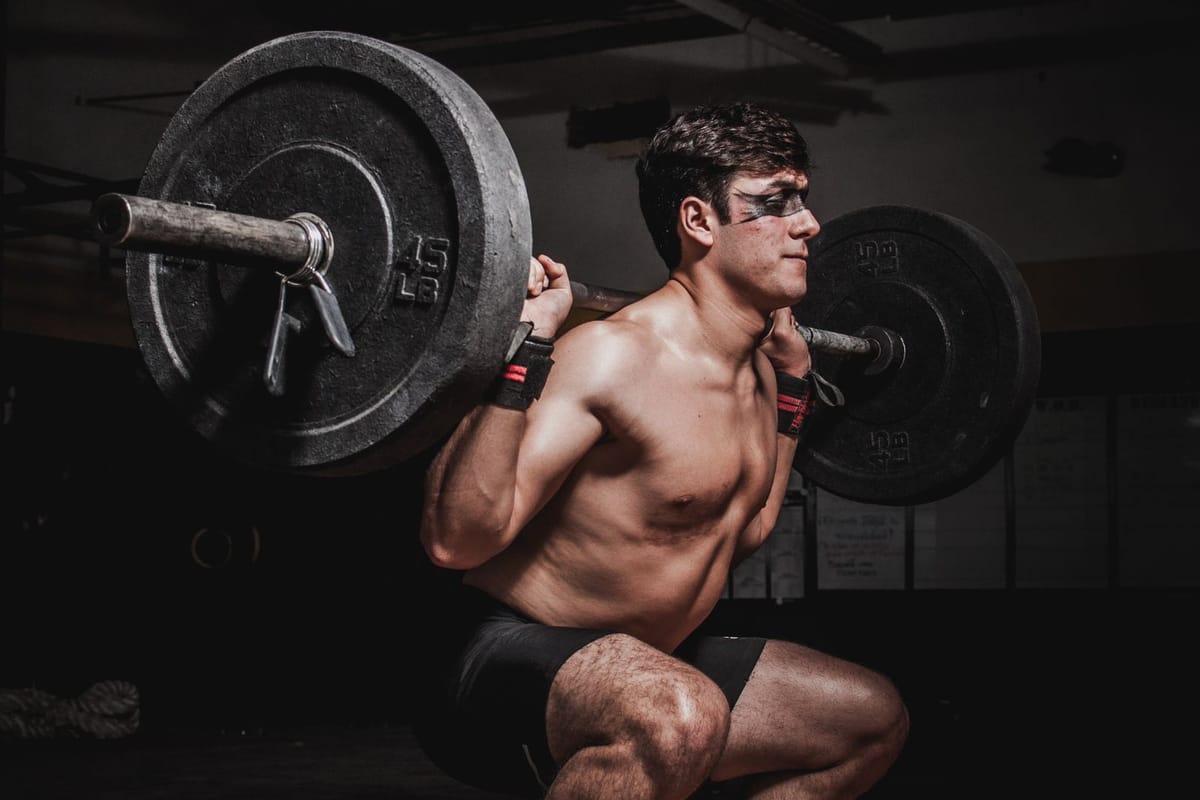
How to Squat: Step-by-Step Technique
- Set your stance. Feet about shoulder-width apart, toes turned out roughly 10 to 30 degrees.
- Create a tripod foot. Keep pressure through the big toe, little toe, and heel.
- Breathe and brace. Breathe into your belly and tighten your midsection.
- Start the descent. Bend at the hips and knees at the same time, sitting down between your heels.
- Track the knees. Keep them in line with your toes. Knees traveling past the toes is normal for most people.
- Reach depth. Lower until your hip crease is level with or below your knee, as long as your back stays neutral.
- Drive up. Push the floor away through your whole foot, chest and hips rising together.
- Finish tall. Stand fully upright with glutes engaged.
Setting Up a Barbell Back Squat
- Bar position: in a high-bar squat, the bar rests on the upper trapezius and keeps the torso upright; in a low-bar squat, it sits lower across the rear shoulders and increases hip involvement. Most beginners start with a high bar.
- Grip and unrack: grip just outside shoulder width, squeeze the shoulder blades together, stand up to unrack, and take two or three short steps back.
- Safety: always squat inside a rack with safety bars set just below your bottom position.
- Warm-up: a few minutes of easy cardio, ankle rocks and 90/90 hip switches, ten paused body-weight squats, then two or three progressively heavier warm-up sets.
How Deep and How to Breathe
Squat as deep as you can while keeping a neutral spine, heels down, and knees in line with your toes. For most people, that is at least parallel. If you cannot reach parallel without rounding or lifting your heels, squat to a box and build range over time. Deeper squats are safe for healthy knees when controlled and train the glutes and quadriceps through a longer range.
Take a breath into your belly before each rep, brace, and hold it through the hardest part of the ascent, then exhale near the top. This brief breath hold, the Valsalva maneuver, stabilizes the trunk but temporarily raises blood pressure. People with high blood pressure, heart disease, or glaucoma should use lighter loads, breathe out steadily on the way up, and ask their doctor about bracing.
Common Squat Mistakes and How to Fix Them
| Mistake | Likely cause | Fix |
|---|---|---|
| Knees caving in | Weak glutes or poor control | Cue “spread the floor,” lateral band walks, lighter load |
| Heels lifting | Limited ankle dorsiflexion | Ankle rocks, box squats, small heel lift |
| Excessive forward lean | Weak upper back or ankle limits | Goblet or front squats, more rows |
| Lower back rounding at the bottom | Hip or ankle limits, weak brace | Squat to controllable depth, refine brace |
| Not reaching depth | Load too heavy | Reduce weight, use a box |
Knees collapsing inward places more stress on the knee ligaments and the joint behind the kneecap. A small pelvic tuck at the bottom of a deep squat is common and usually harmless with light loads, but under heavy loads aim to keep the lower back neutral. Our guide to mobility vs. flexibility explains why active ankle and hip range matter.
Squat Variations for Every Level
- Box squat: teaches depth and control.
- Goblet squat: the best variation for learning an upright posture.
- Front squat: emphasizes the quadriceps and upper back.
- Back squat: allows the heaviest loads.
- Split squat: builds single-leg strength and balance.
Squats work the quadriceps, glutes, adductors, and, to a lesser degree, the hamstrings, with the core stabilizing the trunk. Our beginner strength training guide shows how the squat fits a full plan. Progress from box and goblet squats to front or back squats only when depth, knee tracking, and bracing stay consistent.
Squatting for Athletic Performance
Squat strength supports jumping, sprinting, and changing direction. Athletes in our strength and conditioning programs are tested with velocity-based strength measurement and vertical jump testing so power gains can be tracked as technique improves. Younger athletes learn the same patterns through our youth sports performance training before heavier loading, and every program is adjusted to the athlete's sport, season, and training age.
Frequently Asked Questions About How to Squat
Is it bad if your knees go past your toes when squatting?
No. For most people, knees traveling past the toes is a normal part of a deep squat and keeps the torso more upright. Restricting forward knee travel often shifts more stress to the hips and lower back. The bigger concern is knees caving inward, so keep them in line with your toes. Ankle mobility determines how far forward your knees can comfortably travel.
Should squats hurt your knees?
No. Muscle fatigue in the thighs and glutes is normal, but sharp pain or pain along the joint line is not. Better technique, a shorter range, or a lighter load often helps; persistent pain should be assessed by a medical professional. Warming up thoroughly also helps, and pain that comes with swelling or giving way needs prompt medical attention. Our post on knee pain and rehabilitation covers common causes.
How should beginners start squatting?
Begin with body-weight box squats, then progress to goblet squats with a light dumbbell or kettlebell. Perform two to three sets of 8 to 12 reps, two or three times per week. Move to a barbell once your depth, knee tracking, and bracing stay consistent across every rep. A coach can confirm when you are ready. Film a set from the side to check depth and back position.
Why do I fall backward when I squat?
Falling backward usually means your weight has shifted to your heels or your ankles lack mobility. Hold a light weight in front of you, as in a goblet squat, to counterbalance, and keep pressure through the whole foot. Ankle mobility drills help over the longer term. A slightly wider stance can also help. Practicing paused squats at the bottom position builds balance and confidence.
Should I wear special shoes to squat?
Flat, stable shoes work well for most people. Weightlifting shoes with a raised heel help people with limited ankle mobility stay upright and reach depth. Avoid soft, cushioned running shoes for heavy squats, because they compress under load and reduce stability. Choose footwear that keeps your whole foot in contact with the floor. Lifting barefoot or in minimal shoes is also an option for light work.
How often should you squat?
Two to three times per week works well for most people, with at least a day between heavy sessions. Athletes may squat more often with varied intensity under a coach's plan. Rotating variations, such as goblet, front, and back squats, helps manage joint stress. Recovery, sleep, and other leg training also affect how often you can squat heavy.
What muscles do squats work?
Squats mainly work the quadriceps, glutes, and adductors, with the hamstrings contributing to a lesser degree. The core and spinal erectors stabilize the trunk throughout the lift. Front squats emphasize the quadriceps more, while wider stances involve more glutes and adductors. Single-leg variations add more demand on the hip stabilizers. Deeper squats increase glute involvement compared with partial squats.
Are squats safe for young athletes?
Yes, when technique is coached and loads progress gradually. Squatting builds the leg strength young athletes need for jumping, sprinting, and injury resilience. Our youth sports performance training teaches squat patterns before adding meaningful load. Supervision and gradual progression are what keep youth strength training safe.
Are squats good for adults over 40?
Yes. Squats help maintain leg strength, bone health, and the ability to stand up from a chair or climb stairs. Start with box or goblet squats and progress gradually. Our guide to strength training after 40 covers joint-friendly options. Most adults can squat safely with the right variation and load. Adding load gradually helps tendons and joints adapt.
Can a personal trainer help fix my squat form?
Yes. A coach can spot compensations you cannot feel, adjust stance and depth, and choose the right variation for your body and goals. If knee or hip pain limits your squat, our injury rehabilitation program can help. Small cue changes often make a noticeable difference in how a squat feels. Contact Eastlake Performance to book an assessment.